An Overview of the Incline Lever Row: Design and Core Mechanics
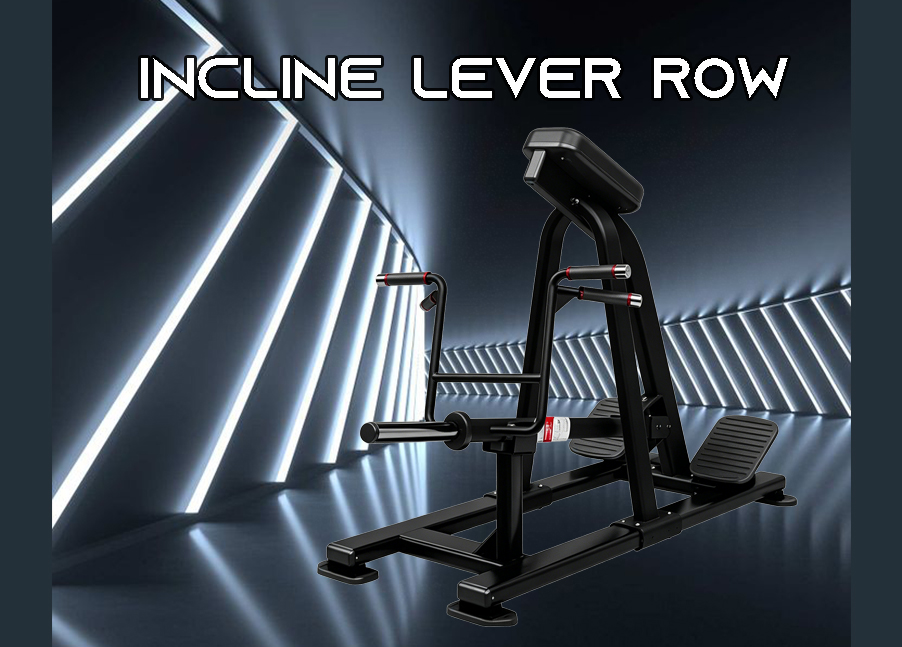
The incline lever row features a padded incline bench, weight-adjustable lever arm, and multi-position handles. Its 30-45 degree incline positions the torso to minimize lower back strain while maximizing back muscle engagement, and the front chest support lets users focus on muscle contraction without balancing or spinal stress—unlike bent-over barbell or T-bar rows.
Key design elements boost functionality: dual-angle handles enable grip variation for targeted muscle work, adjustable foot plates fit different heights, and a sturdy steel frame ensures stability. The smooth lever mechanism maintains constant muscle tension throughout movement, critical for hypertrophy and strength gains.
Core Functions: What the Incline Lever Row Brings to Your Workout
More than a back machine, the incline lever row supports multiple fitness goals, with core functions centered on targeted engagement, safety, and adaptability.
1. Targeted Muscle Isolation and Hypertrophy
It excels at isolating back muscles by stabilizing the torso and eliminating momentum, enabling precise contraction for faster hypertrophy and better mind-muscle connection—ideal for correcting imbalances or focusing on specific back areas.
2. Spine-Safe Strength Training
The padded chest support and incline keep the spine neutral, reducing lower back compression. This makes it safe for those with mild back issues, beginners, or injured athletes needing to maintain back strength without strain.
3. Progressive Overload and Versatility
Adjustable weight plates facilitate progressive overload, while multi-position handles and bench angles allow customization: wide grips target outer back, narrow grips focus on mid-back and rhomboids, and incline adjustments shift emphasis on lats. Some models add resistance band holders for variation.
4. Posture Improvement and Functional Strength
Strengthening spine-supporting muscles (rhomboids, trapezius, lats) improves posture, countering rounded shoulders and back pain from prolonged sitting. It also builds functional strength for daily movements and reduces injury risk.
Targeted Muscles: Which Groups Does It Engage?
The incline lever row primarily targets back muscles, with secondary engagement of stabilizer and assistor groups:
Primary Muscles (Main Targets)
-
Latissimus Dorsi (Lats): The back’s largest muscles, stretched fully at movement start for maximum contraction when pulling the lever. Wide grips enhance lat engagement for a broader back.
-
Rhomboids: Between shoulder blades, responsible for retracting shoulder blades—emphasized by squeezing at the movement’s top, critical for mid-back thickness and posture.
-
Trapezius (Traps): Primarily engages middle and lower fibers, stabilizing the shoulder girdle. Grip width adjusts focus on trap areas.
Secondary Muscles (Stabilizers and Assistors)
-
Posterior Deltoids (Rear Delts): Back of shoulders, assisting in pulling and stabilizing, balancing shoulder development.
-
Biceps and Brachialis: Arm muscles assisting elbow flexion, providing secondary arm strengthening.
-
Forearms: Engaged in gripping, building strength useful for other exercises and daily activities.
-
Core Muscles: Abs and obliques stabilize the torso, maintaining spinal neutrality and adding functional fitness.
Why the Incline Lever Row Stands Out in Back Training
The incline lever row outperforms other back equipment with its blend of safety, precision, and versatility. It eliminates balance needs (unlike free weights) and offers a stable base with consistent resistance (unlike cable rows), simplifying proper form.
Suitable for beginners, intermediate lifters, and advanced athletes, it delivers results by targeting specific muscles, reducing injury risk, and adapting to all fitness levels—making it indispensable for strength training.
In summary, it’s a precision tool that unlocks back training potential, combining biomechanical design, targeted engagement, and safety to build strength, improve posture, and achieve a defined back.


