If you’re looking to build a well-defined, powerful chest, the pectoral fly should be a staple in your workout routine. Often overshadowed by compound movements like bench presses, this isolation exercise targets the chest muscles in a unique way, helping to enhance muscle separation, improve range of motion, and add that coveted “fullness” to your upper body. In this blog, we’ll dive into everything you need to know about the pectoral fly—from its benefits and proper form to variations and common mistakes to avoid.
Table of contents:
What Is the Pectoral Fly?
Benefits of Adding Pectoral Flyes to Your Routine
How to Perform the Pectoral Fly with Proper Form
Common Mistakes to Avoid
Variations of the Pectoral Fly
Tips for Incorporating Pectoral Flyes into Your Workout
Final Thoughts
What Is the Pectoral Fly?
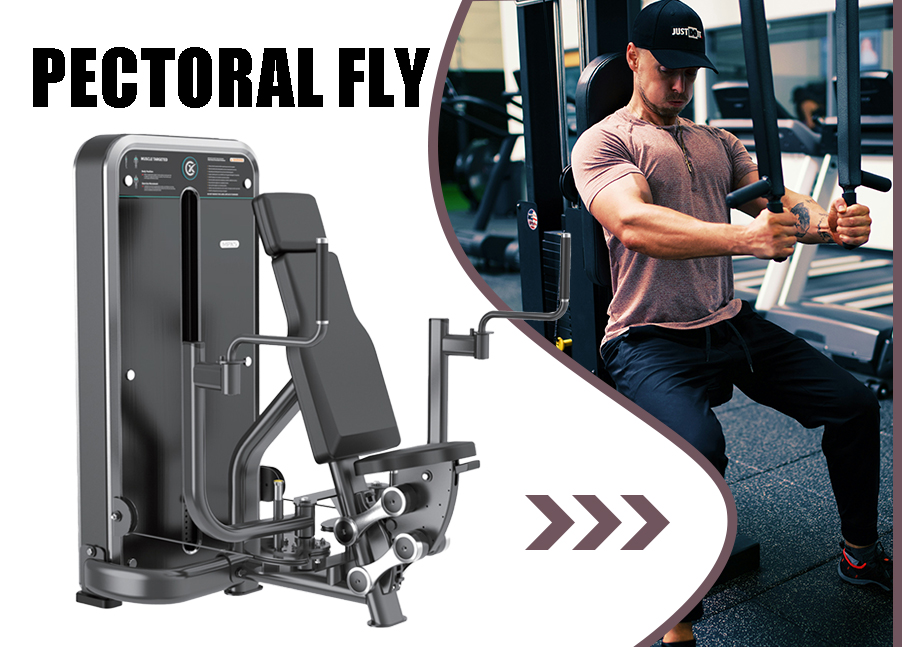
The pectoral fly, also known as the chest fly, is an isolation exercise designed to target the pectoralis major muscles, which are the large muscles of the chest. Unlike compound exercises that engage multiple muscle groups (such as the bench press, which works the chest, shoulders, and triceps), the fly focuses primarily on the pecs, making it ideal for refining and sculpting the chest area.
The movement mimics hugging a large object, with your arms extending outward and then coming together in front of your chest. This stretch-and-contract pattern effectively activates the chest muscles, particularly the sternal (lower) and clavicular (upper) fibers of the pectoralis major, as well as the smaller pectoralis minor muscles beneath them.
Benefits of Adding Pectoral Flyes to Your Routine
Including pectoral flyes in your chest workouts offers a range of benefits that can help you achieve your fitness goals:
- Enhanced Muscle Definition: By isolating the chest muscles, flyes help to create separation between the pecs and surrounding muscles, giving your chest a more chiseled, defined appearance.
- Improved Range of Motion: The exercise stretches the chest muscles when your arms are extended, increasing flexibility and mobility in the shoulder and chest area. This can translate to better performance in other upper-body exercises.
- Balanced Chest Development: Many people struggle with uneven chest growth, often due to over-reliance on pushing movements. Flyes target the chest from a different angle, helping to balance out muscle development.
- Strengthened Stabilizer Muscles: While the primary focus is on the pecs, the fly also engages the anterior deltoids (front shoulders) and serratus anterior (muscles between the ribs and shoulder blades), improving overall upper-body stability.
How to Perform the Pectoral Fly with Proper Form
To get the most out of your pectoral flyes and avoid injury, it’s crucial to master the correct form. Here’s a step-by-step guide:
- Set Up: Lie flat on a bench with your feet planted firmly on the floor, knees bent at a 90-degree angle. This helps stabilize your lower body and core. Grasp a pair of dumbbells, one in each hand, and extend your arms straight up toward the ceiling, palms facing each other. Your elbows should be slightly bent (avoid locking them) to keep tension on the chest muscles.
- Lower the Weights: Inhale and slowly lower the dumbbells out to your sides, keeping that slight bend in your elbows. Imagine you’re opening your arms to give someone a big hug. Lower until you feel a stretch in your chest—typically, your arms will be parallel to the floor or just below.
- Contract the Chest Muscles: Exhale and slowly bring the dumbbells back together, squeezing your chest muscles as you do so. Focus on using your pecs to pull the weights toward each other, rather than relying on momentum or your shoulders.
- Repeat: Complete the desired number of reps (usually 8–12 for muscle growth, 12–15 for endurance).
Pro Tip: Keep your core engaged throughout the movement to prevent your lower back from arching. Avoid swinging the weights—control is key to maximizing muscle activation.
Common Mistakes to Avoid
Even experienced lifters can fall into bad habits when performing pectoral flyes. Here are some common mistakes to watch out for:
- Locking the Elbows: Stiff, straight elbows can put excessive strain on the shoulder joints. Keep a soft bend in your elbows to protect your shoulders and keep tension on the chest.
- Using Too Much Weight: Heavy weights often lead to poor form, such as swinging the arms or relying on momentum. Start with a lighter weight to master the movement, then gradually increase as you get stronger.
- Rushing the Reps: Slow, controlled movements are more effective for targeting the pecs. Avoid quickly dropping or lifting the weights—take 2–3 seconds to lower and 1–2 seconds to raise them.
- Overextending the Arms: Lowering the weights too far can stretch the shoulder ligaments beyond their safe range. Stop when you feel a comfortable stretch in your chest, not when it starts to hurt.
Variations of the Pectoral Fly
Once you’ve mastered the basic dumbbell fly, you can try these variations to keep your workouts challenging and target different parts of the chest:
- Incline Dumbbell Fly: Perform the exercise on an incline bench (set to a 30–45-degree angle) to emphasize the upper chest muscles. This is great for balancing out a chest that’s stronger in the lower region.
- Decline Dumbbell Fly: Lie on a decline bench (feet secured at the top) to focus more on the lower chest. This variation is ideal for building that “lower chest shelf” many lifters aim for.
- Cable Fly: Use a cable machine instead of dumbbells for constant tension on the chest muscles. Stand between two cable pulleys, grasp the handles, and bring your arms together in front of your chest, similar to the dumbbell fly. Cables allow for a greater range of motion and can be easier on the shoulders for some people.
- Machine Fly: If you’re new to the exercise or recovering from an injury, a chest fly machine can provide extra stability. Adjust the seat so that the handles are at shoulder height, then push the handles together, squeezing your chest at the top.
Tips for Incorporating Pectoral Flyes into Your Workout
- Pair with Compound Movements: For best results, combine flyes with compound chest exercises like bench presses or push-ups. Do the compound movements first (when you’re fresh) to build strength, then finish with flyes to isolate and fatigue the pecs.
- Adjust Rep Ranges: Mix up your rep ranges to target different muscle fibers. Try 4–6 reps with heavy weights for strength, 8–12 for hypertrophy (muscle growth), and 15+ for endurance.
- Don’t Overdo It: Since flyes are an isolation exercise, 2–3 sets per workout are usually sufficient. Overtraining can lead to muscle fatigue and increased injury risk.
- Listen to Your Body: If you feel pain in your shoulders or joints, stop immediately. It’s normal to feel muscle fatigue, but sharp or persistent pain is a sign that something’s wrong.
Final Thoughts
The pectoral fly is a versatile, effective exercise that deserves a spot in any chest workout. By focusing on proper form, controlling the movement, and incorporating variations, you can sculpt a stronger, more defined chest while improving flexibility and stability. Whether you’re a beginner or a seasoned lifter, adding flyes to your routine can help you take your chest development to the next level.
So, the next time you hit the gym, grab a pair of dumbbells (or head to the cable machine) and give those pecs the attention they deserve. Your chest will thank you!


